
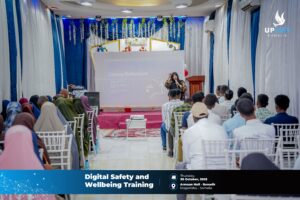
Uplift Somalia organised a Digital Safety and Wellbeing workshop in Mogadishu, bringing together more than 65 youth for an honest conversation about online harm, mental resilience, and emotional wellbeing. Young girls shared personal experiences of cyberbullying, body shaming, and exposure to graphic content, highlighting the urgent need for safe support spaces. Coach Ubax Warsame guided participants through practical tools to protect their mental health and navigate digital risks with confidence. The session created healing, awareness, and a sense of community for youth facing today’s online pressures.
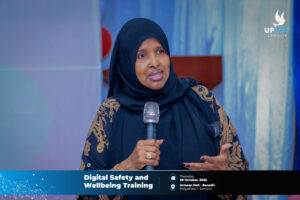
On 30 October 2025, Uplift Somalia hosted a training session on Digital Safety and Wellbeing in Mogadishu. The workshop was delivered by Coach Ubax Warsame, a mental health and digital wellbeing expert. The training focused on helping young people recognise psychological risks in the digital space, respond to online harm in a healthy way, and build stronger emotional resilience.
More than 65 young people attended the session, most of them young girls and students from different universities in Mogadishu. The event brought together youth who wanted to better navigate online risks, improve their digital habits, and learn how to protect their emotional and mental wellbeing.
Context: Mental Health and Digital Safety Challenges Facing Somali Youth
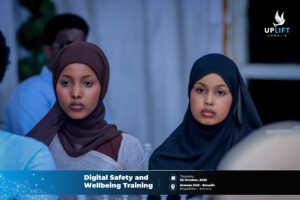
Somali youth are growing up in a country shaped by decades of conflict, insecurity, and displacement, where many families continue to carry unprocessed trauma from the war and its long-term impact on daily life. Young people inherit this emotional weight while also navigating a rapidly expanding digital world that exposes them to new layers of harm. On Somali social media, graphic videos of violence, conflict, and accidents are often shared without any warning, leaving youth repeatedly exposed to disturbing content that affects their sleep, concentration, sense of safety, and emotional stability. This happens alongside cyberbullying, body shaming, and appearance-based criticism, especially targeting girls on issues related to skin tone. Somalia’s widely accepted beauty standard favours lighter skin, which pushes some young girls to bleach their skin, while those who embrace their natural skin tone are often mocked when they post pictures online. These experiences damage self esteem and encourage unhealthy behaviours.
At the same time, mental health services are extremely limited, stigma is high, and there are very few trusted spaces where youth can talk about how online experiences affect their feelings, confidence, and wellbeing. There is also very little public awareness about digital psychological risks, trauma reactions, or how repeated exposure to negative online content shapes behaviour and mental health. As a result, many young people silently carry the combined burden of historical trauma, social pressure, and digital harm without guidance or support. The training responded to these realities by offering a safe space, emotional awareness, and practical tools to help youth protect both their mental wellbeing and their digital lives.
4. Impact and Key Outcomes
Youth openly shared online harm for the first time
Many participants said this was the first space where they could openly talk about cyberbullying, harassment, and body shaming. Young girls shared how comments about their skin tone and appearance affected their confidence and pushed some toward harmful beauty practices like skin bleaching.
A participant’s story highlighted the emotional toll of online bullying
One young girl shared how she was mocked online after mispronouncing the word “foreigner” during a recorded event. The bullying affected her so deeply that she avoided school for two weeks and lost confidence in speaking publicly. Her story opened a wider conversation about shame, language anxiety, and emotional harm.
Graphic online content affects youth mental wellbeing
Participants described how exposure to violent or disturbing videos on Somali social media, often shared without warnings, caused fear, difficulty sleeping, and emotional distress.
Limited mental health support leaves youth without guidance
Youth explained that counselling and emotional support services are minimal, and there are very limited safe spaces to discuss how digital experiences affect their wellbeing. The training filled an important gap by offering emotional awareness and practical coping strategies.
5. Learning the core psychological risks
Coach Ubax introduced three main risks affecting Somali youth online:
- Cyberbullying which harms confidence, trust, and personal safety.
- Emotional erosion which slowly drains empathy and hope as young people are exposed to negative content and perfection online.
- Loss of agency which happens when algorithms and online pressure take control of a young person’s time, attention, and self-worth.
Key Discussions and Learning Points
The workshop covered:
- Understanding mental and emotional risks in online spaces
- The impact of beauty standards and pressure to lighten skin
- The effect of graphic content without warnings
- Building self-confidence when using social media
- How online harassment shapes self-esteem and behaviour
- Creating healthy digital habits and regaining control of time and attention
- The importance of healing, therapy, and community support
Lessons Learned and Recommendations
- Youth need safe environments where they can discuss online harm without judgement.
- Schools and universities should hold regular digital wellbeing and mental health sessions.
- There is a growing need for awareness on cyberbullying, trauma, and emotional resilience.
- Programs should address beauty pressure, self-esteem, and body shaming more directly.
- Future training should integrate both digital safety and emotional healing components.
Future Vision and Call to Action
Uplift Somalia is committed to expanding its mental wellbeing and digital safety initiatives.
We will continue creating programs that build resilience, confidence, and emotional strength among Somali youth.
We welcome partnerships and support to make these programs accessible to more young people across the country.
For collaboration or support, contact us at info@upliftsomalia.org